About our Bodywork
Seitai and craniosacral therapy, brought to your hotel room in central Kyoto — for travelers recovering from long flights and long walks.
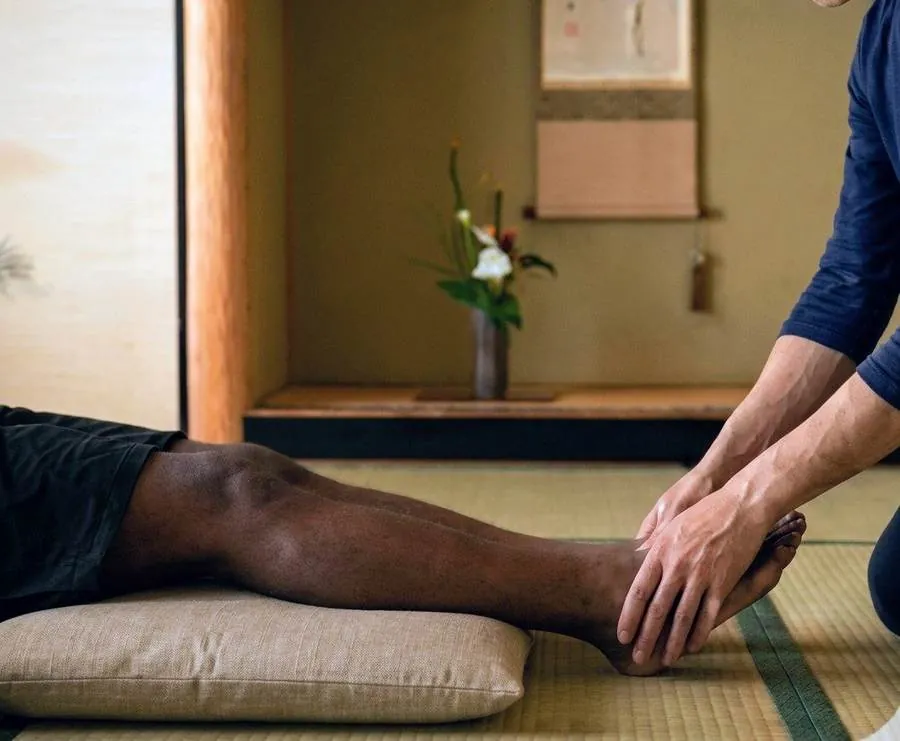
Japanese bodywork, known as Seitai, is a refined therapeutic approach rooted in Japan.
Combining subtle touch with dynamic techniques, each session is carefully tailored to support deep relaxation, balance, and recovery.
It is offered here as a private, in-room experience for travelers staying in Kyoto.
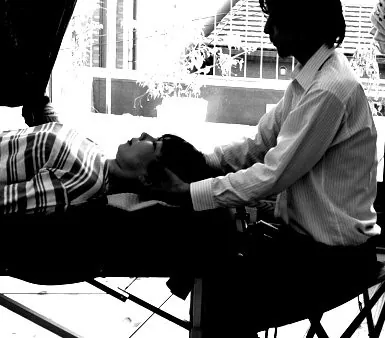
Rather than applying fixed techniques, Seitai-based bodywork responds to your body’s condition in the moment.
Pressure, pace and depth are adjusted as your body settles — including the fatigue it has carried through travel.
Each session begins with listening — not with words, but through the hands — to what the body is ready to let go of.
At its heart, Seitai trusts the body’s own intelligence — the work is to awaken that capacity, not to replace it.
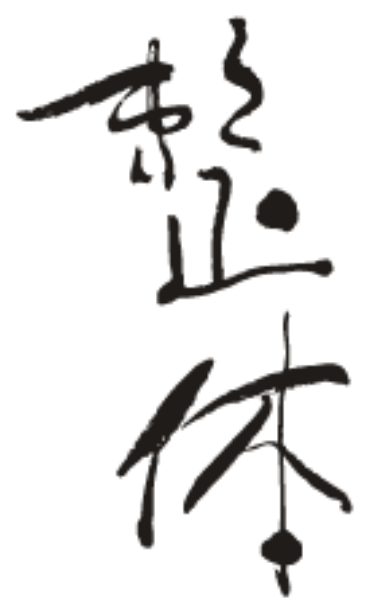
Seitai (整体) means “ordering the body.” It is a Japanese tradition of hands-on bodywork that looks at how the body holds itself as a whole — posture, breath and the tension it carries — rather than working on one sore spot.
Like the tea ceremony, ikebana, the martial arts and Noh, Seitai values refined movement and quiet attention. Its essence lies in the sensitivity of the practitioner’s hands: a cultivated ability to feel, and to read, what the body is saying.
It is not something done to you, but a quiet dialogue through touch, in which your body is invited to find its own balance.
More about Seitai
Long before modern medicine was widely available, people in many parts of the world developed their own ways of caring for the body by hand. Japan was no exception: a wide range of folk remedies grew up naturally, and shiatsu is one well-known example.
Over the centuries, many streams flowed together:
From these overlapping influences, Seitai took shape as a discipline of its own in the twentieth century. Its central figure was Haruchika Noguchi (1911–1976), who founded the Seitai Kyokai (Seitai Association) in 1956.
The same period also gave rise to other Japanese hands-on practices, among them Reiki, founded by Mikao Usui in 1922.
Because Seitai grew from many roots, there is no single “official” style. A few of the best-known lineages:
Based on the work of Haruchika Noguchi. Rather than “fixing” the body, it aims to awaken the body’s own ability to settle and recover. Known for yuki and taiheki.
Developed by Keizo Hashimoto (1897–1993), a physician in Sendai. The body is guided toward the movements that feel easiest and most comfortable.
Organized by Susumu Kamei, with its association founded in Matsuyama in 1951. It brings together traditional Japanese methods with osteopathy and chiropractic.
Many practitioners today focus on posture and the pelvis, drawing on chiropractic and osteopathy.
Our work is rooted in Noguchi Seitai, alongside a range of other traditional Seitai methods. Through years of practice in Kyoto since 2009, these have been brought together, refined and developed into an approach of our own.
Two ideas from Noguchi Seitai run through every session:
Breath is at the center of the work, as the name of our Kyoto studio — Kokyu Seitai, “breath Seitai” — suggests. Craniosacral therapy adds a further layer of subtle touch.
The work moves across a spectrum, chosen to match what your body needs:
Rather than isolating a single area, the session addresses the body as a connected whole:
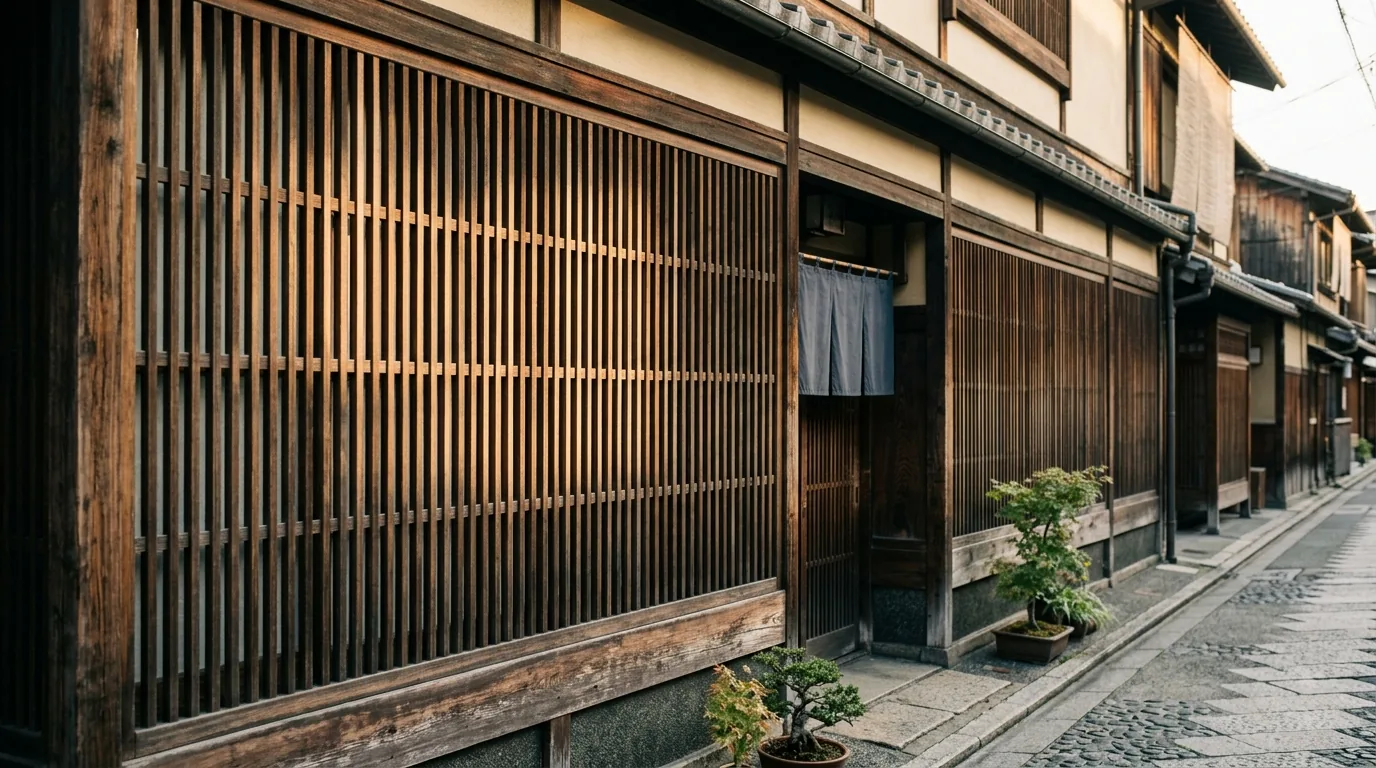
Everything takes place in your own room, at a time that suits your schedule.
What the session addresses, and what people commonly notice:
Please note: Seitai is not a massage done to a set pressure. Depending on your body’s condition, the practitioner may use firm pressure in some areas and a very light touch in others — the choice comes from reading your body, not from a request for “harder” or “softer.” You can always ask us to ease off or stop.
Naoya Yokomori has practiced bodywork in Kyoto since 2009, and since 2019 has also worked at an organic store salon in the Kansai area.
His approach is also informed by training in craniosacral therapy through the Upledger Institute in the United States. This complements the Japanese bodywork foundation with a refined understanding of subtle touch and nervous system regulation.
Fully insured for in-room and studio sessions
Each session is tailored to your body’s condition — combining gentle cranial work with full-body techniques that range from subtle to dynamic, depending on what your body needs. If you are carrying jet lag, tension or deep fatigue through your days in Kyoto, we are here to support your recovery.
Fully clothed · no oils · private in-room sessions in central Kyoto